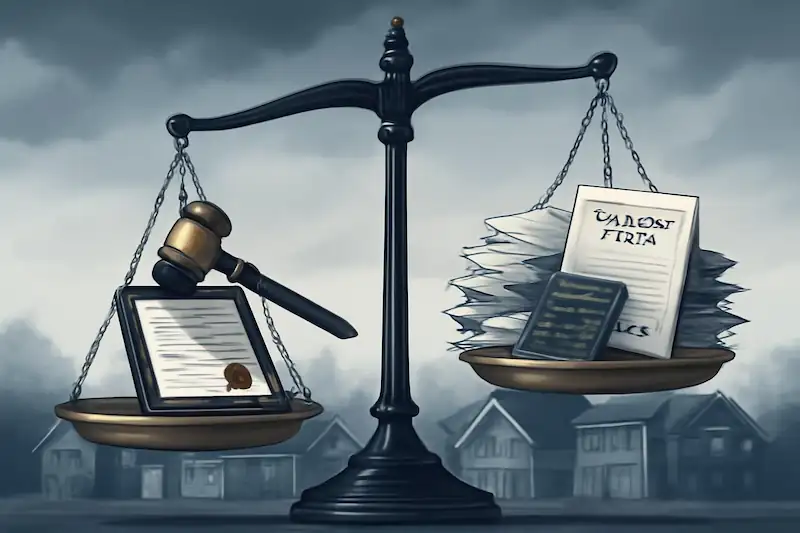
Upholding fiduciary duty is the minimum legal floor for any community association board. When volunteers stop acting like responsible corporate directors and begin operating as a private club, they create measurable harm for every owner. Under state law, directors of a nonprofit must discharge their duties in good faith and with the care an ordinarily prudent person would exercise in a similar position. When board members admit on the record they are unqualified to manage infrastructure yet refuse to hire professional management, they have abandoned that duty.
Failure to Maintain Legal Structure
A primary example of fiduciary breach is the failure to maintain the community's legal structure. In some instances, boards have held meetings where owners unanimously approved new governing documents, only for the board to fail to record them with the county for years. This leaves the community in corporate limbo where rules are legally unenforceable yet are still used to entice new buyers. This lack of clarity is a direct violation of the duty of care.
Financial and Administrative Negligence
Financial and administrative negligence often signals a deeper collapse of duty. Documented cases exist where associations failed to file corporate tax returns for nearly two decades or allowed essential liability insurance to lapse without notifying the membership. A prudent director does not rely on personal judgment to bypass statutory requirements. When a board refuses to provide mandatory records like bank statements and meeting minutes, they obstruct the transparency required by law.
Governance Failures in Elections
Governance failures often peak during elections. When a self-appointed interim board conducts poorly noticed meetings or counts its own ballots in anonymous elections, the process is a legal nullity. This type of systemic mismanagement makes the community effectively ungovernable through standard channels.
Court-Supervised Receivership as Remedy
The most logical and reasonable remedy for a board that has entered a state of statutory abandonment is the appointment of a court-supervised receiver. A receiver is a neutral professional who takes control of association assets and infrastructure projects. This remedy removes the attachment to personal control and restores the association to a functioning legal entity. Seeking a receiver is not about winning a neighbor dispute but a necessary act to reduce communal risk and ensure that public disaster funds or owner assessments are managed with professional accountability.